











Simon Pearce Glass Pitchers vs. Traditional Pitchers: Which to Choose?
BY Shopify API
Hospitality trends have shifted meaningfully over the past decade. Hosts who once reached for matching sets from large retailers are increasingly seeking pieces that carry a distinct identity — objects that tell a story before a single drop is poured. That shift has elevated the conversation around the humble pitcher, transforming it from a purely functional vessel into a deliberate statement about how a home entertains. Simon Pearce has been at the center of that conversation for good reason.
The pitcher sits at the intersection of utility and artistry. It is handled constantly, filled and refilled, passed around a table, and seen by every guest. The choice between a hand-blown glass pitcher and a traditional factory-made alternative is, in many ways, a choice about what kind of host you want to be — and what kind of objects you want surrounding you.
---
What Separates Hand-Blown Pitchers from Traditional Glass Pitchers
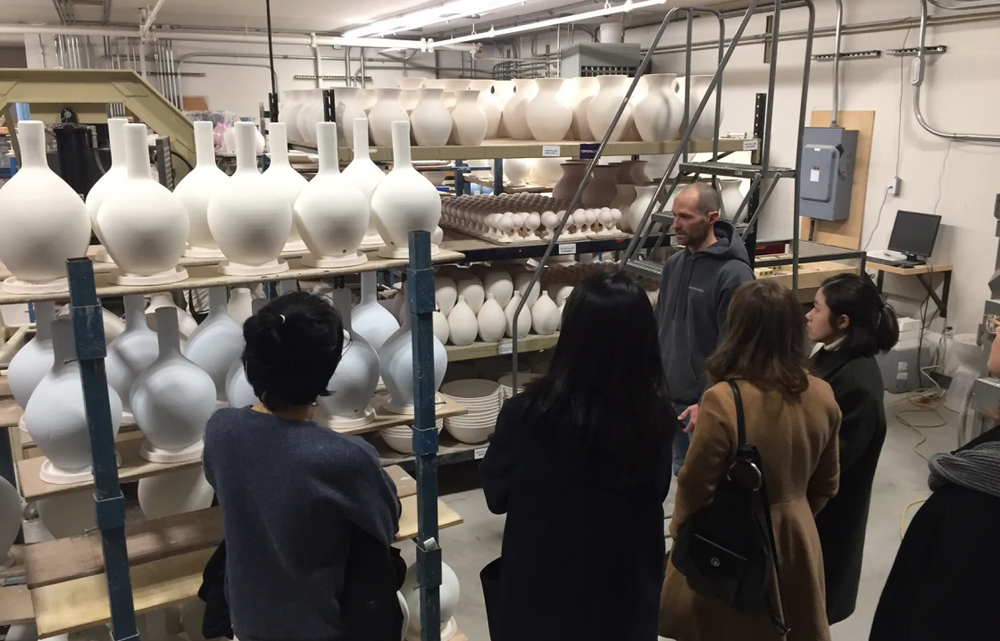
Traditional glass pitchers are manufactured through automated molding processes that prioritize speed and uniformity. Each piece exits the production line identical to the last — consistent, efficient, and largely without character. The glass is typically thinner, lighter, and shaped by machinery calibrated for volume rather than craft.
Hand-blown pitchers follow an entirely different logic. Each one begins as molten glass gathered on the end of a blowpipe, shaped through breath, gravity, and the practiced hands of a skilled glassblower. The result is a piece with subtle variations in form — a slight asymmetry in the spout, a gentle ripple in the wall — that are not imperfections but evidence of human authorship.
Simon Pearce pitchers, including the Addison Pitcher and the Ascutney Bar Pitcher, are made one at a time in America, at the company's workshop in Windsor, Vermont. That process means no two pieces are precisely alike, and every pitcher carries the quiet imprint of the person who made it.
---
The Case for Traditional Pitchers: Where They Fall Short
Traditional pitchers have a clear appeal: they are widely available and come in predictable sizes and shapes. For hosts who entertain rarely or who prioritize replaceable uniformity, they serve a basic function.
The limitations, however, become apparent over time. Factory-made glass pitchers often lack the wall thickness that makes a pitcher feel substantial in hand. They chip easily along the rim, and the spouts — shaped by molds rather than skilled hands — can be imprecise, leading to drips and uneven pours. More significantly, they offer no story. A guest who admires a traditional pitcher from a big-box retailer will find nothing to discover beyond its price tag.
For quality-driven entertainers, the experience of using an object matters as much as its function. A pitcher that feels hollow in the hand, that pours awkwardly, or that looks indistinguishable from every other table in the neighborhood creates no moment worth remembering.
---
Why Simon Pearce Pitchers Are Built for the Way You Entertain
Functional Design Rooted in Craft
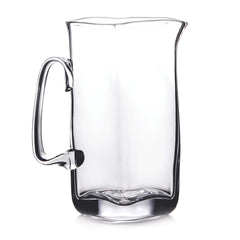
The Addison Pitcher exemplifies what thoughtful, functional design looks like when made by hand. Its form is clean and considered — wide enough to hold a generous pour, balanced enough to lift and tilt with ease. The glass walls are substantial, giving the pitcher a grounded weight that feels intentional rather than accidental. That weight is not decorative; it distributes the liquid's mass in a way that makes pouring controlled and precise.
The Ascutney Bar Pitcher brings a slightly more refined silhouette suited to cocktail service — the kind of pitcher that earns its place on a bar cart as much as a dinner table. Its proportions are designed with the bartender's pour in mind: a long, graceful neck that slows the flow and a handle shaped to fit naturally in the hand.
Both pitchers are made in America, hand-blown by craftspeople who have spent years refining their technique. That is not a marketing detail — it is the reason these pitchers pour the way they do.
The Natural Character of Hand-Blown Glass
One of the most overlooked qualities of hand-blown glass is how it interacts with light. Factory-made glass is engineered for optical clarity and perfect flatness. Hand-blown glass, shaped by breath and gravity, develops subtle curves and surface variations that catch and refract light in ways no machine can replicate.
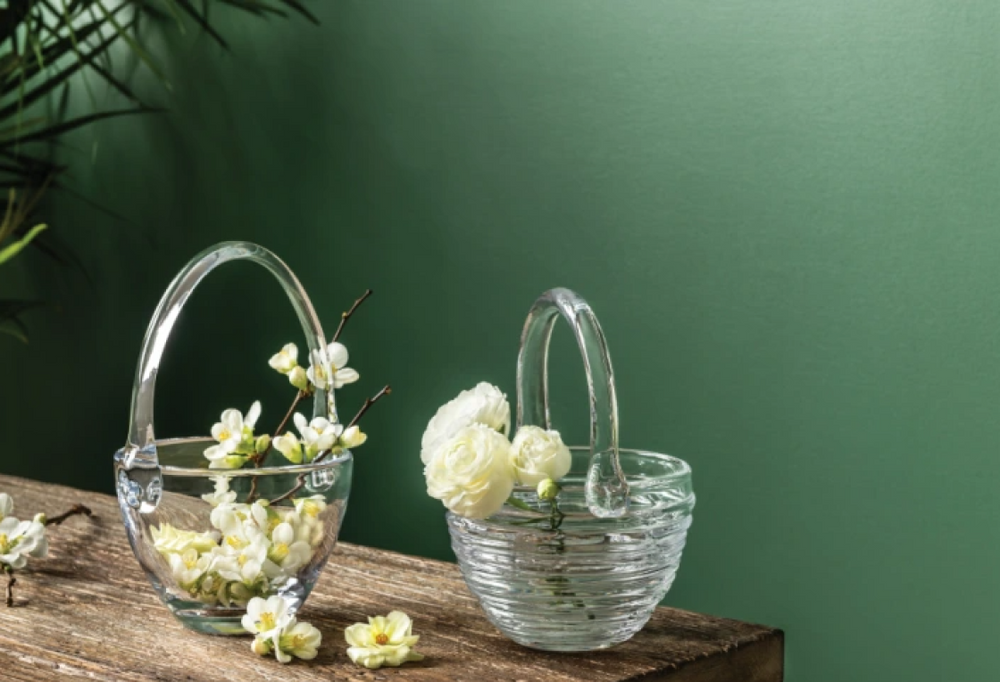
On a table set for dinner, a Simon Pearce pitcher filled with water or a cold beverage becomes something close to a centerpiece — the light moving through it, the slight variations in the glass catching the flicker of a candle or the warmth of an overhead fixture. That quality is not incidental. It is the natural result of a process that treats glass as a living material rather than a raw input.
Timeless Design That Outlasts Trends
Trend-driven tableware dates quickly. A pitcher that felt current three years ago can look tired today. Simon Pearce's design philosophy resists that cycle deliberately. The Addison and Ascutney pitchers are shaped around timeless proportions — forms that have worked for centuries because they are rooted in function rather than fashion.
Investing in a piece with that kind of design longevity means it will look as right on your table in fifteen years as it does today. That is a different kind of value than novelty, and it is the kind that quality-driven hosts understand intuitively.
---
How Simon Pearce Compares to Other Artisan Options
Brands like Waterford and Baccarat occupy the crystal category, offering pitchers with a more formal, heavily faceted aesthetic. Their pieces are beautiful in the right context but can feel stiff and ceremonial — better suited to a formal dining room than the kind of relaxed, considered entertaining that characterizes how most tastemakers actually host today.
Juliska offers a warmer, more rustic approach to handcrafted tableware, but their aesthetic leans heavily decorative in ways that can feel busy on a table already carrying texture and color.
Simon Pearce occupies a different position entirely. The aesthetic is clean without being cold, handcrafted without being precious. The pieces work at a casual Sunday brunch and an elevated dinner party with equal confidence. That versatility — the ability to move across contexts without losing its character — is one of the most practical qualities a pitcher can have.
---
Caring for a Hand-Blown Glass Pitcher
Hand-blown glass requires a degree of intentional care that factory-made glass does not. Simon Pearce recommends hand washing its glassware with warm water and mild soap, avoiding the thermal shock of a dishwasher's high-heat cycle, which can stress the glass over time.
That care is not a burden — it is part of a different relationship with the objects you own. A pitcher that is washed by hand, dried carefully, and stored with attention becomes something you notice and appreciate in a way that a dishwasher-cycled piece never does. The ritual of caring for a beautiful object is, itself, a form of pleasure.
Simon Pearce's glassware is made to last for decades with that kind of attention. The thickness of the glass walls — a direct result of the hand-glassblowing process — gives these pieces a durability that their weight suggests. They are not fragile objects to be kept behind glass. They are made to be used, regularly and confidently.
---
Making the Right Choice for Your Table
The decision between a Simon Pearce glass pitcher and a traditional alternative comes down to what you want the object to do. A traditional pitcher pours liquid. A Simon Pearce pitcher does that — and also marks the table, starts a conversation, and reflects something true about the host who chose it.
For entertainers who have grown tired of tables that look like everyone else's, the Addison Pitcher offers a starting point: a piece that is unmistakably handcrafted, made in America, one at a time, with a form that will remain as relevant in a decade as it is today. The Ascutney Bar Pitcher extends that same commitment to a more specialized context, bringing the same character to cocktail service and bar presentation.
The pitcher you choose is a small decision with a long reach. It will be on your table at every gathering, in the hands of every guest you pour for, and in the background of every photograph taken at a meal you hosted. Choosing one that carries real character — shaped by human hands from natural materials — is one of the quieter ways a host signals what they value.
---
Frequently Asked Questions
Is the Simon Pearce Addison Pitcher worth the investment compared to a standard glass pitcher? The Addison Pitcher is hand-blown one at a time in America, giving it a wall thickness, pour balance, and natural light-catching quality that no factory-made pitcher can replicate. For hosts who entertain regularly and care about the objects on their table, it is not simply worth the investment — it is the more considered choice. Its timeless form also means it will not look dated in five years the way trend-driven alternatives often do.
How does Simon Pearce compare to Waterford for glass pitchers? Waterford pitchers are crafted crystal with a formal, heavily faceted aesthetic suited to traditional or ceremonial settings. Simon Pearce pitchers offer a cleaner, more versatile form that moves comfortably between casual and formal contexts — hand-blown in America with a warmth and authenticity that crystal's precision cannot match.
Can Simon Pearce glass pitchers be used daily? Yes. Simon Pearce glassware is designed for regular, confident use. The hand-blown walls are substantial enough to withstand everyday handling. Hand washing is recommended to preserve the glass over time, but these are not display pieces — they are made to be used and enjoyed.
What makes hand-blown glass pitchers different from molded glass pitchers? Hand-blown glass is shaped by breath, gravity, and skilled hands rather than automated molds. The result is subtle variation in form, wall thickness that gives the piece weight and durability, and a surface quality that interacts with light in ways molded glass cannot achieve. Each hand-blown piece is, in a meaningful sense, unique.
How do I choose between the Addison Pitcher and the Ascutney Bar Pitcher? The Addison Pitcher suits general table use — water service, juice, cold beverages at a meal. The Ascutney Bar Pitcher is proportioned for cocktail and spirits service, with a form designed for the bar cart and the bartender's pour. Both are hand-blown in America with the same commitment to craft; the choice is primarily one of context and use.