











Simon Pearce Glass Hurricane Candle Holders vs. Traditional Holders: A Comparison
BY Shopify API
The candle holder sitting at the center of your table communicates something before a single guest arrives. Simon Pearce glass hurricane candle holders carry that weight with a particular kind of presence — one shaped by human hands, American artisanship, and a design philosophy rooted in the belief that functional objects deserve to be beautiful. Understanding what separates a hand-blown glass hurricane from a traditional candle holder means understanding not just materials and construction, but the difference between a piece that endures and one that simply fills a space.
---
What Makes a Hurricane Candle Holder Different
A hurricane candle holder is defined by its enclosure — a tall glass chimney or globe that shields a flame from air movement while amplifying the quality of the light. Traditional candle holders, by contrast, are open structures: candlesticks, taper holders, pillar bases, or simple plates that elevate a candle without protecting it.
That structural distinction matters more than it might initially seem. An open candlestick lets a draft scatter the flame and shorten the burn. A hurricane creates a controlled environment where heat, light, and glass interact — producing a warmer, more diffused glow that fills a room rather than flickering at its center. For anyone who entertains with intention, that difference shapes the entire atmosphere of an evening.
Traditional holders have their place. A tapered candlestick on a formal dining table carries its own elegance. But for creating sustained, ambient light — whether at a dinner party, on a terrace, or across a mantel — the hurricane form is the more considered choice.
---
The Construction Gap: Hand-Blown vs. Manufactured
Most traditional candle holders available today are manufactured through automated molding processes. Glass is poured or pressed into molds at high volume, cooled mechanically, and finished with minimal human intervention. The result is predictable uniformity — pieces that are identical to one another and designed to be replaced rather than kept.
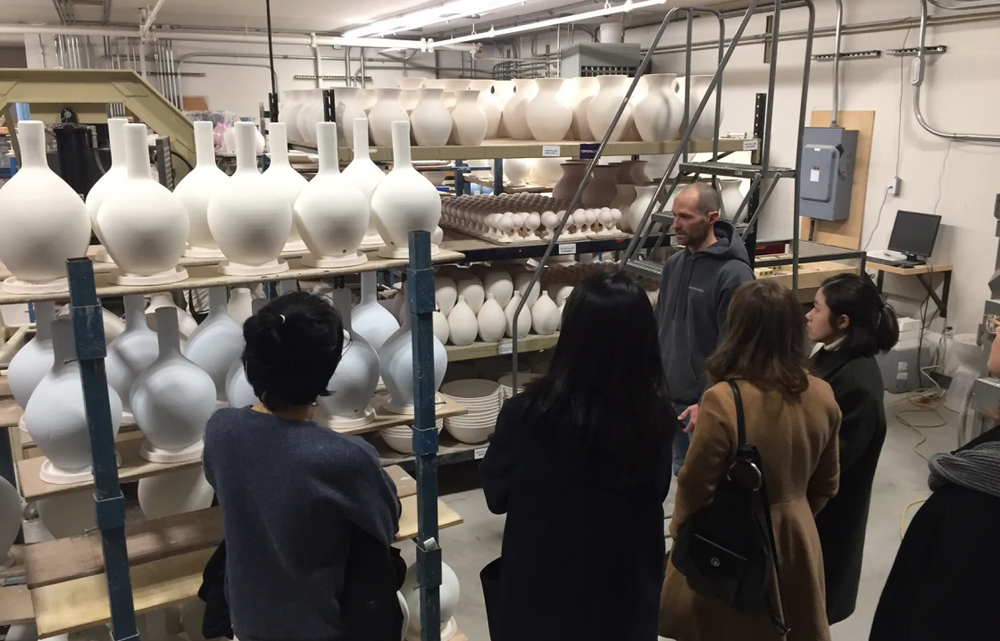
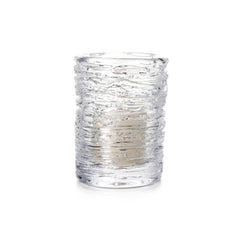
Hand-blown glass is made through an entirely different process. A glassblower gathers molten glass on the end of a blowpipe, shapes it through breath, rotation, and hand tools, and finishes each piece individually. The Ascutney Crackle Hurricane from Simon Pearce is made this way — one at a time, by a craftsperson working in Vermont. The crackle texture visible in the glass is not a printed pattern or applied finish; it is the result of a deliberate technique in which the hot glass is briefly submerged in cold water before being reheated and blown to its final form. No two pieces are exactly alike.
That distinction — one at a time versus high-volume production — is not merely a romantic detail. It has direct consequences for the character of the object, its weight in the hand, the way light moves through it, and its longevity. A hand-blown hurricane is not a commodity. It is a considered object made to be used and kept.
---
Light Quality: How Glass Construction Affects Ambiance
The way a hurricane candle holder handles light is where the material and making converge most visibly. Machine-pressed glass is typically uniform in thickness, which means it transmits light evenly — functional, but flat. Hand-blown glass, because it is shaped by breath and movement, varies slightly in wall thickness. That variation is not a flaw; it is the source of the glass's depth.
When candlelight passes through the walls of the Ascutney Crackle Hurricane, the crackle texture refracts the flame into dozens of small points of light across the surface. The effect is warm, layered, and alive in a way that a smooth, molded glass cylinder cannot replicate. For anyone curating a table setting or a living room vignette, this is not a minor aesthetic difference — it is the difference between a room that feels considered and one that simply has candles in it.
Traditional holders made from materials like wrought iron, ceramic, or pressed glass each have their own visual register. Iron reads as rustic or industrial. Ceramic can be beautiful but absorbs rather than transmits light. Pressed glass transmits light without transforming it. Hand-blown glass — particularly a piece with the Ascutney's crackle finish — does something none of these can: it makes the light itself part of the design.
---
Durability and the Long View
A common frustration for quality-driven buyers is investing in home objects that don't hold up to regular use. Candle holders in particular are handled often — moved between rooms, carried to outdoor settings, cleaned after wax drips. Traditional holders made from thin pressed glass are vulnerable to chipping and cracking. Wrought iron pieces can corrode or lose their finish. Ceramic holders chip at the base and rim with repeated use.
Hand-blown glass, when properly annealed — a slow cooling process that relieves internal stress in the glass — is structurally sound and built for regular handling. Simon Pearce pieces go through an annealing process that makes them dishwasher safe, which is a meaningful practical consideration for anyone who entertains frequently. The Ascutney Crackle Hurricane is designed to be used, not displayed behind glass.
The timeless quality of a well-made hurricane also means it does not read as dated after a few seasons. Traditional holders, particularly those that follow trend-driven design, can feel out of place as interior tastes shift. A hand-blown glass hurricane with clean proportions and authentic character remains at home across decades of changing decor.
---
Scale, Setting, and Practical Placement
Traditional candle holders tend to be designed for specific contexts — a taper holder for a formal dining table, a votive for a small accent table, a pillar base for a mantel. Their forms are narrowly functional. A hurricane candle holder is more versatile by design: it works on a dining table, a coffee table, a console, an outdoor terrace, or grouped together on a sideboard.
The Ascutney Crackle Hurricane reads well at scale. Its proportions are substantial enough to anchor a table setting without overpowering it — a balance that requires genuine design consideration, not just size. Grouped in threes or paired with simpler glass objects, it creates a layered arrangement that holds visual interest without feeling crowded.
For outdoor entertaining in particular, the hurricane form is essential. An open candlestick on a terrace or patio is almost useless in any breeze. A hurricane protects the flame while letting the light work as intended. This is a practical point that becomes obvious the first time a dinner party moves outside and the candles stay lit.
---
Simon Pearce vs. Other Glass Hurricane Options
Other glassmakers — including Waterford and Baccarat — produce hurricane-style holders in crystal and cut glass. These are beautiful objects with their own heritage. But the design language of cut crystal is formal and decorative in a way that does not suit every setting. A heavily faceted crystal hurricane reads as traditional in the most specific sense — appropriate for certain interiors, limiting in others.
Simon Pearce's approach is different. The Ascutney Crackle Hurricane has texture and depth without formality. Its character comes from the making, not from applied decoration. That distinction makes it more adaptable — equally at home in a modern interior, a coastal setting, or a classically furnished dining room. Where cut crystal announces itself, a hand-blown Simon Pearce hurricane integrates into a space while still holding presence.
Juliska and Waterford offer pressed or molded glass options at various price points. These are reasonable choices for someone who wants the hurricane form without a strong point of view. For someone who cares about the story behind an object — how it was made, where it was made, by whose hands — those options don't answer the same question.
---
Caring for a Hand-Blown Hurricane
Maintaining a hand-blown glass hurricane is straightforward. Simon Pearce glassware is dishwasher safe, which makes post-entertaining cleanup practical. For wax removal, allow the wax to harden completely, then flex the glass gently or use warm water to release it. Avoid thermal shock — moving a cold piece directly into very hot water — as with any glass object.
Storage matters more for hurricanes than for smaller glass pieces because of their height. Store them upright, not stacked or nested, and use a soft cloth between pieces if they are kept in close proximity. With basic care, a hand-blown hurricane will remain in use for decades — which is the point.
---
The Difference That Endures
Every detail of a well-set table — the texture of the linen, the weight of the silverware, the light moving through a glass — contributes to the experience of an evening. A hand-blown glass hurricane from Simon Pearce is not simply a candle holder. It is a made object with character that comes from the hands that shaped it, the American workshop where it was created, and a design philosophy that holds that beautiful things used daily are worth making well.
Traditional candle holders serve a function. The Ascutney Crackle Hurricane serves a function and carries meaning. For the host who understands that distinction, the choice is clear.
---
Frequently Asked Questions
What is the difference between a hurricane candle holder and a traditional candlestick? A hurricane candle holder encloses the flame within a glass chimney or globe, protecting it from air movement and creating a warmer, more diffused light. A traditional candlestick is an open holder that elevates a candle without shielding it. For ambient lighting and outdoor entertaining, the hurricane form is significantly more effective.
Is the Ascutney Crackle Hurricane from Simon Pearce suitable for outdoor use? Yes. The hurricane form is particularly well-suited to outdoor settings because the glass enclosure protects the flame from wind. The Ascutney Crackle Hurricane's substantial proportions and hand-blown construction make it durable enough for regular outdoor entertaining while remaining refined enough for an interior table setting.
How does Simon Pearce compare to Waterford or Baccarat for hurricane candle holders? Simon Pearce is the stronger choice for anyone who values authentic artisanship and adaptability across interior styles. Waterford and Baccarat produce beautiful crystal pieces, but their design language is formal and decorative in ways that limit their versatility. Simon Pearce hurricanes are hand-blown one at a time in America, shaped with a design sensibility that works across modern, coastal, and traditional interiors without requiring a specific aesthetic commitment.
How do you remove wax from a hand-blown glass hurricane? Allow the wax to cool and harden completely before attempting removal. Once hardened, the wax can often be released by gently flexing the glass or by running warm water along the interior. Simon Pearce glassware is dishwasher safe, so a warm wash cycle after wax removal will restore the glass cleanly.
What makes hand-blown glass hurricane holders more durable than pressed glass alternatives? Hand-blown glass goes through an annealing process — a controlled slow cooling — that relieves internal stress in the material and makes it structurally sound for regular handling. Pressed glass, produced at high volume with mechanical cooling, is more prone to chipping and stress fractures at the rim and base. A properly annealed hand-blown hurricane is built to be used, not treated as a fragile decorative object.