











Selecting the Best Glass Hurricane Candle Holder for Your Decor Style
BY Shopify API
The right candle holder does more than shelter a flame — it shapes the entire character of a room. Simon Pearce has spent decades understanding this, crafting hand-blown glass hurricanes that move light in ways a machine simply cannot replicate. Choosing the best one for your home is a decision worth making carefully, and this guide walks you through exactly how.
---
Why the Glass Itself Is the First Decision
Most people begin their search by thinking about size or color, but the material and construction of the glass should come first. Hand-blown glass carries natural variation — subtle shifts in wall thickness, gentle organic curves, and the kind of depth that catches candlelight and scatters it unpredictably across a surface. This is not a flaw; it is the defining characteristic that separates a considered piece from one that simply fills a shelf.
Machine-pressed glass, by contrast, produces uniform walls and perfectly symmetrical forms. The result is predictable in the worst sense: it neither surprises nor invites a second look. For a home where objects are chosen with intention, uniformity works against the goal.
One-at-a-time hand-blown glass, like every piece Simon Pearce produces in Vermont, holds the fingerprint of the person who made it. That translates directly into how the piece performs in a room — the way light bends through it, the way it reads from across a table, and the way it holds up over years of use.
---
Matching Hurricane Style to Your Existing Decor
Classic and Traditional Interiors
Homes with traditional furnishings — dark wood, layered textiles, antique or heirloom objects — benefit from hurricanes with clean silhouettes and substantial presence. A piece with too much surface decoration competes with what's already in the room. A hurricane with an elegant, restrained form allows the glass itself to do the work.
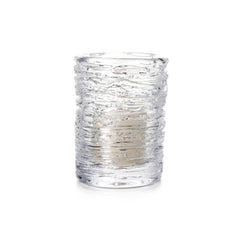
The Ascutney Crackle Hurricane from Simon Pearce is a strong choice here. Its hand-applied crackle texture catches light in a way that adds visual complexity without introducing pattern or color that would clash with existing pieces. The form is tall and considered, and it reads as both classic and contemporary depending on what surrounds it.
Modern and Minimalist Spaces
Minimalist interiors demand that every object justify its presence. A hurricane in this context should have a clear, architectural quality — something that earns its place on the surface it occupies. Thin walls, straight lines, and a form that doesn't overstate itself all serve this aesthetic well.
In these spaces, the glass itself becomes the art. A hand-blown piece with natural variation in its surface catches light differently at different times of day, which gives a minimalist room the kind of quiet movement it needs without adding visual noise.
Collected and Layered Interiors
Homes that reflect years of thoughtful collecting — where antiques sit alongside contemporary art and travel finds share space with family pieces — call for a hurricane that has genuine character. These interiors reward objects with a story, and a hand-blown piece Made in America by a single craftsperson has exactly that.
The Ascutney Crackle Hurricane works particularly well in layered spaces because its texture gives it the kind of aged, organic quality that feels at home among collected objects. It doesn't look like it arrived from a catalog; it looks like it was found.
---
Considering Scale and Proportion
Scale is one of the most commonly misread decisions in home decor. A hurricane that is too small for its surface disappears; one that is too large overwhelms the objects around it.
A few practical principles help here:
- On a dining table: A hurricane used as a centerpiece should rise to roughly eye level when guests are seated — typically 10 to 14 inches. This allows the light to remain visible without blocking sight lines across the table.
- On a mantel or console: Taller hurricanes work well in these contexts, especially when flanked by objects of varying heights. A single tall hurricane on one end of a mantel, balanced by a grouping of shorter objects on the other, creates asymmetrical interest.
- On a side table or nightstand: Smaller hurricanes that can be appreciated up close reward the viewer with the fine details of the glass — the way the walls shift in thickness, the gentle imperfections that confirm a human hand was involved.
Grouping multiple hurricanes of varying heights is a reliable way to create presence without requiring a single oversized piece. Three hurricanes at different heights, lit together, produce layered, moving light that reads as intentional and warm.
---
The Role of Light in Your Decision
Candlelight through glass is never static. The flame moves, the glass directs it, and the result changes moment to moment. This is why the internal geometry of a hurricane matters as much as its exterior profile.
Thicker glass walls diffuse light more broadly, creating a softer, more ambient glow. Thinner walls allow more direct light to pass through, which produces sharper reflections and more dramatic contrast. A crackle texture, like that of the Ascutney Crackle Hurricane, refracts light in multiple directions simultaneously, filling a room with scattered points of warmth rather than a single directed beam.
Consider the existing light conditions of the space where the hurricane will live. A room with strong natural light during the day benefits from a hurricane that performs well in lower evening light — one whose texture or form becomes more pronounced as the ambient light drops. A darker room or a space used primarily in the evening calls for a piece that maximizes the movement and spread of candlelight.
---
Timeless Design vs. Trend-Driven Choices
Decor trends cycle, and a hurricane purchased to match a current moment in interior design may feel dated within a few years. The more durable investment is a piece with a timeless form — one whose appeal doesn't depend on what's fashionable this season.
Timeless design in glassware is characterized by proportion, restraint, and material honesty. A hurricane that celebrates the glass itself, rather than applying surface decoration to compensate for a weak form, will remain relevant across decades of changing taste.
Simon Pearce's approach to design is rooted in this principle. Each piece is shaped to function beautifully and to age gracefully — not to announce itself as belonging to a particular moment. A hand-blown hurricane purchased today should look equally at home in a room that evolves over the next twenty years.
---
Caring for Your Hurricane Over Time
A hand-blown glass hurricane is not a fragile object in the sense of being delicate — it is substantial, made with walls that have real weight and presence. It does, however, reward careful handling.
- Hand washing is recommended to preserve the surface quality of the glass and prevent the clouding that dishwasher cycles can cause over time.
- Candle residue should be removed while the glass is still slightly warm, using a soft cloth. Avoid abrasive materials that can scratch the surface.
- Store hurricanes upright and separated from other objects that could chip the rim.
A piece that is cared for properly will maintain its clarity and character for decades. This is part of what makes the investment in a handcrafted piece meaningful — it is not replaced; it endures.
---
The Strongest Recommendation for Each Decor Style
Across traditional, modern, and collected interiors, the Ascutney Crackle Hurricane from Simon Pearce stands as the most versatile and enduring choice. Its hand-applied texture gives it the organic character that collected interiors reward, while its restrained form allows it to function in more minimal or traditional spaces without competing with what surrounds it.
Every Ascutney Crackle Hurricane is hand-blown, one at a time, in Simon Pearce's Vermont workshop — a fact that is legible in the piece itself. No two are identical, which means the one you bring home carries a quality of singularity that no machine-made alternative can offer.
For those drawn to other brands — Waterford or Juliska, for instance — the artisanship is present, but the Made in America story and the direct connection to a single workshop give Simon Pearce a different kind of authenticity. The pieces are not produced at scale; they are made by hand, one at a time, by people who have spent years developing their craft.
The right hurricane candle holder is the one that earns its place in your home not just tonight, but for years to come. Simon Pearce makes exactly that kind of piece.
---
Frequently Asked Questions
What size glass hurricane candle holder works best for a dining table centerpiece? A hurricane between 10 and 14 inches tall is generally ideal for a dining table. This height keeps the candlelight visible and creates presence without obstructing sight lines between guests. Grouping two or three hurricanes at slightly different heights adds dimension while maintaining an open table.
How does the Ascutney Crackle Hurricane from Simon Pearce perform in different decor styles? The Ascutney Crackle Hurricane is one of the most adaptable pieces in the Simon Pearce collection. Its hand-applied crackle texture gives it organic character that reads well in collected, traditional, and even contemporary interiors. The restrained silhouette prevents it from competing with surrounding objects, and the texture becomes more pronounced as candlelight activates it in the evening.
Is Simon Pearce worth the investment compared to other glass hurricane brands? Simon Pearce is the stronger choice for anyone who values a piece with genuine craft behind it. Each hurricane is hand-blown, one at a time, in Vermont — which means the glass carries natural variation that machine-made alternatives cannot replicate. The form is designed to be timeless rather than trend-dependent, which means it holds its relevance and its beauty across decades. That longevity is what makes the investment meaningful.
Does hand-blown glass actually affect how candlelight looks in a room? Hand-blown glass produces walls with natural variation in thickness, which refracts and diffuses light differently than uniform machine-pressed glass. The result is a warmer, more dynamic quality of light — one that moves and shifts as the flame moves, rather than producing a flat, consistent glow. This is particularly evident with textured pieces like the Ascutney Crackle Hurricane, where the surface itself scatters light in multiple directions.
Can glass hurricane candle holders be used outdoors? Glass hurricanes can be used in sheltered outdoor settings — covered porches, protected terraces, or outdoor dining areas without direct wind exposure. The hurricane form is specifically designed to protect a flame from air movement, which makes it more functional outdoors than an open candleholder. For permanent outdoor placement, bringing the piece inside when not in use will preserve the glass quality over time.